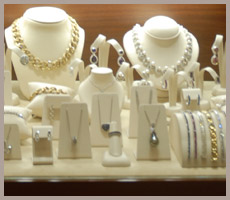
Gemstones
 Click here to see examples of different stone cuts. Click here to see examples of different stone cuts.
|
|
Amber — Golden Time
Capsule Amber is one of the few gem materials not technically considered a mineral. Formed from fossilized tree resins 10 million to 100 million years ago, it is classified as an organic gem. Unlike most gemstones, inclusions can add a great deal to the value of amber – especially if these inclusions are plants or insects that have been trapped inside. A complete leaf or mushroom is highly desirable. Even more sought-after are pieces of amber containing the completely intact body of an insect. Being a gemstone of organic origins, amber requires some special but simple care and handling. Amber is a rather soft gemstone and can be easily scratched. It lends itself well to earrings and necklaces where contact with hard objects is minimized. |
 |
|
Amethyst — Color of
Royalty
Amethyst is the birthstone for February. |
|
|
|
Aquamarine — The Softer Side of
Blue
Aquamarine holds its place securely among the world’s most desirable gems. Ranging in tone from a very light to medium blue, many aquamarines will exhibit a slight tint of green in their body color. Generally the darker shades are more valued, but many people prefer the lively brightness of lighter hues. Aquamarine is readily available in larger sizes over 5 carats. In fact, gem quality aquamarine crystals weighing several hundred pounds have been discovered. Aquamarine is the birthstone for March. |
|
|
|
Citrine — Kissed by the
Sun
Citrine is a gemstone that generates a feeling of warmth and often sparks an attitude of lightheartedness in the wearer. Sunny and affordable, citrine is the perfect complement to any jewelry wardrobe, blending especially well with pastel colors and bright, polished surfaces. Citrine is also readily available in larger sizes. It’s not uncommon to find beautiful faceted gems over 10 carats, especially in lighter shades of yellow. Citrine is an alternate birthstone for November. |
|
|
|
Emerald — The King of
Green
Emerald is translucent to transparent. It is generally thought of as green in color. But look closer, and you’ll discover subtle but important differences in tones and hues. Some of the world’s finest emeralds are described as slightly bluish green in color and medium in tone. Pure green emeralds are also highly desirable. Emerald is part of the mineral family called beryl. If a gem is too light in tone it is no longer considered an emerald, but is referred to as green beryl. Common in many emeralds are a wide variety of internal characteristics or inclusions, often described collectively as a “garden.” Many feel that this garden adds interest and individuality to an emerald. Emeralds without these internal features are very rare and valuable. Emerald is the birthstone for May. |
|
|
|
Garnet — A Family of
Colors
Garnet’s popularity dates back more than 5,000 years to ancient Egypt, where the gems were worked into beads or set into hand wrought jewelry. Jewelry set with dark red garnets from Czechoslovakia was extremely popular in the nineteenth century. Pieces set with these Bohemian garnets are still in high demand today for their beauty and uniqueness. Today’s gemstone collector knows that garnet offers a myriad of color choices in every shade imaginable, except blue. Garnet is the birthstone for January. |
|
|
|
Opal — Fireworks and
Rainbows
Opal is treasured as much for its many different appearances as it is for its breathtaking beauty. There are over 100 different variety and trade names used today to describe opals. Opals with a lighter body color are often called white opals, and those with a darker (and more rare) body color are classified as black opals. Whether white or black, the value of an opal depends upon the vividness of the spectral flashes (often called play of color) visible from within the gem and the patterns these colors form. Another popular opal with little or no play of color is fire opal. Fire opals range in hue from vivid yellows to fiery reds and oranges. Opal is the birthstone for October and shares this designation with tourmaline. |
|
|
|
Peridot — A Gem Born of
Fire
Peridot has a history dating back well over 3,500 years. It was first mined on the Isle of Serpents in the Red Sea. Later renamed St. John’s Island, this historically important source of peridot, supplied gems to the royal rulers of ancient Egypt, including Cleopatra. In recent years the popularity of peridot has steadily increased. This can be attributed to its availability, affordability and the growing use of shades of chartreuse by some of the world’s leading fashion designers. Peridot is the birthstone for August. |
|
|
|
Ruby — The Rarest Gemstone of
All
Ruby possesses a color like no other red gemstone. At its finest, the purity of its burning crimson hue inspires us with love and desire. Rubies come in a variety of colors ranging from purplish red to orangey red. Ruby belongs to the same mineral family as sapphire, but if a gem is too light in tone or too purple or orange in hue, it is called a fancy sapphire and not a ruby. The most sought-after rubies are pure red or red with a very slight pinkish undertone. Very fine quality rubies, especially in sizes over 3 carats, are incredibly rare and valuable—much rarer than top quality colorless diamonds. Ruby is the birthstone for July. |
|
|
|
Sapphire — Bright and
Brilliant
Sapphire, the celestial gemstone long associated with the sky and the heavens, has been revered by humanity for thousands of years. Symbolizing truth, honesty and faithfulness, sapphire is an excellent choice for an engagement ring or any piece of jewelry given as a gift of love. As with most gemstones, the finest sapphires, no matter their color, are a vibrant hue with a medium tone. Extremely dark, almost black sapphires and extremely pale sapphires are among the most affordable. When shopping for a sapphire, let your own personal taste guide you. Sapphire is the birthstone for September. |
|
|
|
Spinel — A Blushing
Beauty
Spinel has been a longtime favorite of the serious gem collector, due to its incredible brilliance, outstanding durability and wide array of colors. Making spinel even more attractive is its surprising affordability, often attributed to the general public’s lack of awareness of the gemstone. For those looking for an alternative to higher priced rubies and sapphires, spinel may be the best choice. Natural spinel holds no birthstone designation, but laboratory grown spinel in many different colors has been commonly used to imitate birthstones (including diamonds) in less expensive jewelry since the early 1900s. Synthetic spinel is rarely used to imitate natural spinel. |
|
|
|
Tanzanite — One of the Newest and Bluest of
Gems
Tanzanite owes much of its beauty to an unusual gemological property called pleochroism, the ability to exhibit more than one color. When viewed from different directions, tanzanite can look blue, violet, purple, bronze or gray. Before a tanzanite is faceted, the gemstone cutter studies the crystal and decides which directional orientation will show the best color. Most cutters will try to produce a pure blue tanzanite, but cutting to achieve a blue color sacrifices a lot of weight and results in a smaller and more costly finished gem. Yet the blue of a well-cut tanzanite is so breathtaking that most agree the sacrifice is well worth it. Tanzanite shows its strongest colors in sizes of 4 to 5 carats and larger. Smaller tanzanites are usually soft blue, light violet or lilac purple. Tanzanite is sometimes used as an alternate for the traditional December birthstones turquoise and zircon. |
|
|
|
Topaz — The Hues of an Ocean
Sunset
Topaz owes its long-lasting popularity to many things, but chief among these is its remarkable combination of beauty and affordability. Found in many different colors and sizes, topaz continues today to be one of the world’s most desirable and sought after gemstones. Topaz is the birthstone for November. In recent years blue topaz has been used as an alternate birthstone for December. |
|
|
|
Tourmaline — King of
Color Tourmaline has been historically confused with many other gemstones, and understandably so. The finest greens can rival an emerald or tsavorite garnet. Beautiful yellow and red tourmalines mimic the look of fine fancy sapphires. A relatively recent discovery of tourmalines in 1989 in the Paraiba state of Brazil revealed brilliant hues of blues and greens more vivid than any ever seen before. These Paraiba tourmalines have been described as neon green, electric blue and sizzling turquoise. Tourmaline’s colorful nature, increased availability and attractive affordability have led to a tremendous growth in its popularity over the past 20 years. Pink tourmaline is a popular alternate for the month of October. |
| |
| [ Top of page ] |
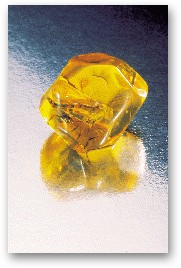 Amber is a delicate, fossilized tree resin that often locks in secrets from the past. Amber is available in a wide array of colors, the most popular ranging from yellow to orange, mimicking the color of honey touched by the setting sun. Other less common colors include red, green, blue, violet and black. Ranging from transparent to opaque, the finest amber is clear with little or no cloudiness.
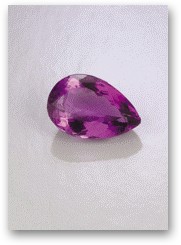 Amethyst holds a magical appeal that’s proven to be timeless and universal. Amethyst displays a majestic hue of purple, moving from very light to very dark. With purple being the chosen color of royalty, amethyst has enjoyed an unwavering popularity dating back thousands of years. The finest quality amethyst exhibits a high degree of transparency and a rich deep purple color enhanced by flashes of burgundy or rose. Amethyst has been a popular gemstone for centuries, and with good reason. It is beautiful, durable and affordable. Amethyst is a variety of the mineral species quartz. It is a hard gemstone that is resistant to both scratching and breaking. Amethyst can be faceted or fashioned into cabochon cuts.
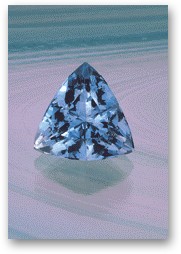 The Greeks proclaimed this highly prized, light blue gem aquamarine, because it sparkles like the sea touched by the sun. Found in an array of pastel tones from very light to medium blue, aquamarine is often tinted by a splash of green. The delicate greenish blue of a fine aquamarine conjures up images of dancing light on the purest of tropical waters.
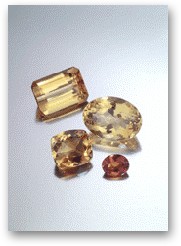 As the golden variety of the quartz family, citrine takes its name from citron, the French word for lemon. But don’t think that all citrine is the color of lemonade. Citrines range from the soft hues of golden champagne to the rich, deep color of a fine Madeira wine. Its broad range of colors and outstanding affordability make citrine one of the most popular and desirable gemstones in the world.
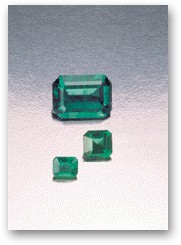 Emerald, with its rich green reflecting the colors of spring, has been treasured for thousands of years as an emblem of rebirth and enduring love. The favorite of Pharaohs, prized by the Mogul rulers of India, and coveted by the royal houses of Europe, no other green gemstone can rival the emerald’s luxuriant green hue, entrancing beauty and eternal popularity.
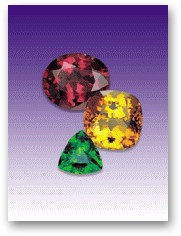 When most people think garnet, they see only images of a dark red gemstone. But look a little deeper into garnet’s many varieties, and you’ll discover every color of the rainbow except blue. Few gems can rival garnet in the diversity of colors available. The green of summer grass, the gold of freshly harvested wheat, the orange of fiery hot steel, the pink of a delicate rosebud – garnet offers all these colors and more.
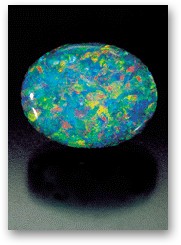 Unlike any other gemstone, opal dazzles the eye with a spectral display of flashing and dancing colors – colors that move and shift within the opal’s mysterious depths. A Roman historian in the first century AD wrote, “There is in them a softer fire than the ruby, there is the brilliant purple of the amethyst and the sea green of the emerald – all shining together in incredible union. Some by their splendor rival the colors of the painters, others the flame of burning sulfur or of fire quickened by oil.” Opal offers the wearer a wider variety of appearances and color choices than any other gem.
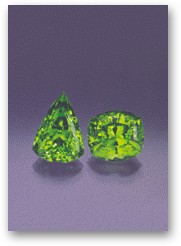 Often called the “volcanic gem,” peridot usually forms in the rocks created by violent volcanic activity. On rare occasions, peridot also has been found in meteorites that have fallen to earth. No matter the source, whether from Mother Nature’s fiery depths or rocks that are truly out of this world, peridot has caught the attention of humans for thousands of years. Ranging from a light yellowish green to darker, richer shades of olive, peridot conjures images of young spring grass or the greens of a rich, dark forest at twilight.
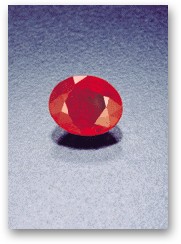 Ruby is all about passion—penetrating the heart with color and fire like no other gemstone. Unmatched in legend and seldom rivaled in beauty, it combines the energy of light with the power of fire into a single breathtaking scarlet colored gem. Recognized as the world’s most valued gemstone for centuries, ruby holds the undisputed title as the “King of Gems.”
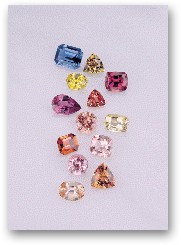 Long considered the ultimate blue gemstone, sapphire’s mood swings from the coolest and quietest shades to the most vibrant and lusty blues imaginable. And sapphire doesn’t stop there. You’ll discover some sapphires – often referred to as fancy sapphires because they aren’t blue – in shades of pink, purple, orange, yellow, gold and green, ranging from soft pastels to vibrant hues that shout with excitement. Varied and versatile – the choice is yours!
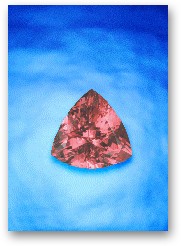 Overshadowed for centuries by more popular gemstones, spinel is a truly magnificent beauty just waiting to be discovered by today’s savvy gem connoisseur. In the past, spectacular spinels, particularly red spinels, were often misidentified as rubies or sapphires. From the British Crown Jewels to the imperial crown of Catherine II of Russia, what were thought to be magnificent rubies have been found to actually be equally beautiful spinels. And red isn’t the only color of spinel. You’ll find soft pastel shades of pink and purple, fiery oranges, and cool hues ranging from powdery gray to the most intense blues imaginable.
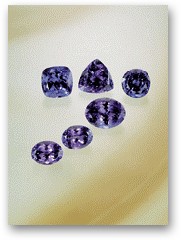 Tanzanite is the “new kid on the block” of the gemstone kingdom. Discovered in Tanzania in 1967 and introduced to the American market in 1969, tanzanite has catapulted to incredible popularity in a very short amount of time. It was named in honor of the country in which it was found and introduced in the United States for the first time by Tiffany & Co. Available in colors ranging from blue to violet to purple, few gems can rival tanzanite’s depth of hue and purity of color.
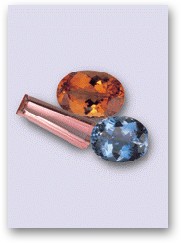 Cast your eyes upon the ocean waters as the setting sun displays its dance of color, and you’ll discover all the rich spectral hues of topaz. On its cool side, topaz ranges from a soft sky blue to the richest and most vivid aquas and greenish blues imaginable. Warmer tones of topaz take on the golden hue of a fine chardonnay or the blush of a tree ripened peach. Other colors range from rich, warm browns to lusty variations of orange and cinnamon. Some of the most rare and exceptional shades of topaz include rich pinks and sherry reds.
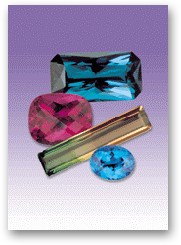 Pick a color – any color – and you’ll find a beautiful tourmaline to match. Occurring in more colors and combinations of colors than any other gem variety, tourmaline offers both vibrancy and beauty. And if an incredible range of colors among different tourmalines isn’t enough, individual crystals can vary in color along their length or width. Gems cut from these multi-colored crystals may in fact show two or more color combinations in one gemstone!